
Why muralism matters so much
For many travelers, Mexico City first appears through its archaeology, food, museums, and historic streets. But one of the most powerful ways to understand the city is through its murals. Mexican muralism is not simply decoration on large walls. It is one of the clearest ways Mexico has told stories about identity, revolution, memory, struggle, education, and public life. That is why muralism often leaves such a strong impression on foreign visitors: it turns buildings into narratives and makes history feel visible, immediate, and alive. An official INBAL statement on muralism routes in Mexico City describes these routes as a way to recognize how Mexico has told its history, ideals, and conflicts on walls, almost as if the city itself were a living museum.
This matters especially in Mexico City because muralism is not locked inside one museum or one neighborhood. It appears in some of the capital’s most important cultural spaces, including Palacio de Bellas Artes, the Museo Vivo del Muralismo, the Museo Mural Diego Rivera, and San Ildefonso. Official city and cultural sources present these places not as isolated attractions, but as part of a wider cultural landscape where art, architecture, politics, and national identity meet. That makes muralism one of the best entry points for travelers who want more than a checklist of landmarks.
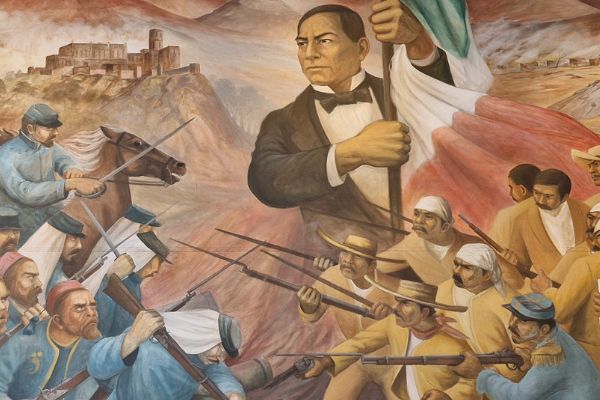
Why murals help explain Mexico better than many travelers expect
One reason Mexican muralism in Mexico City is so compelling is that it makes abstract history easier to understand. Many visitors arrive with broad references to the Mexican Revolution, Diego Rivera, or Frida Kahlo, but those names often remain disconnected. Murals help connect those pieces. They show that public art in Mexico was not created only to beautify buildings. It was also meant to communicate ideas, question power, present national memory, and bring culture into public space. The official permanent collection description for the Museo del Palacio de Bellas Artes explains that its mural collection brings together more than thirty years of this history in one place, which already suggests how central muralism became to the country’s cultural life.
For foreign travelers, this is especially valuable because murals are more intuitive than many other forms of interpretation. A visitor may not read every label in a museum, but a mural immediately demands attention. Its scale, emotion, symbolism, and drama invite questions. Who are these people? Why is this scene so intense? What political or historical moment is being represented? In that sense, muralism works almost like a visual shortcut into Mexican history. It helps travelers feel the story before they fully understand it, and then rewards them when they begin to read it more carefully.
Bellas Artes as a great starting point
For many visitors, Palacio de Bellas Artes is the ideal starting point for understanding muralism. Official Mexico City tourism describes Bellas Artes as one of the country’s most prominent buildings and the major fine arts institution for Mexico as a whole. It also notes that the upper levels include murals by José Clemente Orozco, David Alfaro Siqueiros, Diego Rivera, Jorge González Camarena, Roberto Montenegro, Manuel Rodríguez Lozano, and that the first floor includes murals by Rufino Tamayo. That concentration of major artists makes Bellas Artes one of the easiest and richest places for a traveler to encounter Mexican muralism in a serious way.
This is one reason Bellas Artes feels so much bigger than a theater or a beautiful building. The architecture alone is memorable, but once travelers understand that the palace also contains an extraordinary mural collection, the visit becomes far more meaningful. Instead of admiring the building only as a monument, visitors begin to see it as a place where Mexico staged its modern cultural identity. It is one of the rare places where architecture, painting, political memory, and national symbolism all come together in a way that is still accessible to first-time travelers.
Museo Vivo del Muralismo and the public voice of art
Another essential place for understanding Mexican muralism is the Museo Vivo del Muralismo. According to official Mexico City tourism information, this museum is dedicated specifically to sharing Mexican muralism and is located in the Historic Center, inside the iconic Secretariat of Public Education building, which is identified there as a UNESCO World Heritage site. The same official source notes that the museum houses works by David Alfaro Siqueiros, Diego Rivera, Roberto Montenegro, Luis Nishizawa, and others, and that through these murals it tells the country’s history, identity, and social values.
That description is important because it reveals something central about muralism in Mexico: it was public from the beginning. Murals were created for people to encounter in civic and educational spaces, not just elite galleries. A place like the Museo Vivo del Muralismo makes that idea easy to grasp. It shows that walls in government and public buildings became part of the country’s cultural conversation. For travelers, this helps explain why muralism in Mexico feels different from simply seeing paintings in a museum. The setting matters. The building matters. The public function matters.
Diego Rivera and the story of the city
No discussion of muralism in Mexico City is complete without Diego Rivera. One of the best places to understand his public storytelling is the Museo Mural Diego Rivera, where the famous mural Sueño de una tarde dominical en la Alameda Central became the core of an entire museum. The official INBAL museum page explains that the mural was originally proposed in 1947 for the Hotel del Prado, with the Alameda Central chosen as the theme because of its proximity to that historic public park. The same official page recounts the dramatic later history of the work, including its rescue after the 1985 earthquakes and the creation of the museum that opened in 1988.
This story fascinates many travelers because it shows how deeply muralism is tied to Mexico City itself. Rivera did not choose a random subject. He used the Alameda and its social world to reflect Mexican history across centuries, including colonial figures, modern intellectuals, revolutionary tensions, and iconic personalities such as Frida Kahlo and La Catrina. Official museum information describes the mural as a sweeping historical vision of the country staged in one of the capital’s most emblematic public spaces. That is exactly why it is so rewarding for visitors: it is not only art to be admired, but a compressed version of Mexico’s historical imagination.
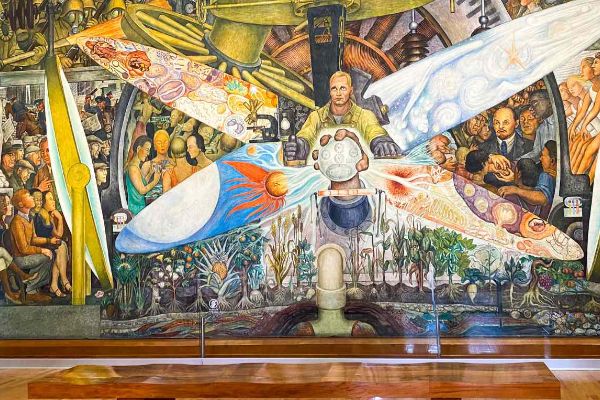
San Ildefonso and the roots of the movement
Another key place in the muralism story is San Ildefonso. Official Mexico City tourism’s week-long itinerary points out that Colegio de San Ildefonso is where Diego Rivera painted his first mural in Mexico and where he first met Frida Kahlo. Even that brief official reference tells travelers something important: muralism in Mexico City is not only about the finished masterpieces everyone recognizes. It is also about origins, experimentation, and the spaces where artists began to define how public art could shape national culture.
San Ildefonso matters because it helps visitors understand that Mexican muralism did not emerge fully formed as a tourist attraction. It grew in educational and intellectual spaces, as part of a broader cultural effort to imagine Mexico through public images. That origin makes the movement even more interesting for travelers. It means the murals were never just background. They were part of a serious national conversation about who Mexicans were, how history should be remembered, and how art could reach the broader public.
Why muralism feels especially powerful in Mexico City
Muralism can be appreciated anywhere, but it feels especially powerful in Mexico City because the city itself already has so many historical layers. In the same trip, a visitor might stand at Templo Mayor, walk through colonial streets, enter Bellas Artes, cross Alameda Central, and then see murals that reinterpret the nation’s past in public buildings. Official city tourism repeatedly presents the capital as a place where archaeology, architecture, museums, and cultural institutions overlap closely, and muralism thrives in exactly that kind of environment.
That layered setting helps explain why murals in Mexico City often feel more meaningful than murals elsewhere. They are not floating in a vacuum. They are surrounded by the very streets, institutions, and public spaces that shaped them. A mural about revolution or public education feels different when it is housed in a building that still belongs to civic life. A mural about Alameda Central feels different when the park itself is just outside. Mexico City gives muralism context in a way that deepens the experience for travelers who pay attention.
How foreign travelers can explore muralism in a smarter way
A smart approach to muralism in Mexico City begins with accepting that this is not a single-stop experience. It works best as a cultural route. Bellas Artes offers one of the easiest introductions because it brings major muralists together in one landmark. The Museo Vivo del Muralismo expands that understanding by placing muralism back into a civic and educational setting. The Museo Mural Diego Rivera shows how one monumental work can become a lens for reading the city itself. And San Ildefonso helps explain the roots of the movement. Together, these places create a much richer experience than seeing only one famous mural and moving on.
This is also why muralism works so well for first-time visitors. It can connect travelers to multiple sides of Mexico at once: art, history, politics, education, architecture, and urban identity. Official Mexico City sources increasingly frame the city through curated cultural routes and strategic itineraries, and muralism fits that model perfectly because it helps travelers move through the city with a theme in mind rather than a random list of stops.
Why a private guide makes a major difference
Muralism is one of the best examples of a subject that becomes dramatically better with expert guidance. On your own, you may notice the scale, the colors, and the power of the images. But many of the most important meanings are easy to miss without context. A private guide can explain why one mural emphasizes labor, why another is full of political tension, why a certain artist approached the nation differently, or how the mural connects to the building around it. That kind of interpretation turns a visually impressive experience into a coherent cultural story.
This matters even more for foreign visitors because many of the murals assume some knowledge of Mexican history, public figures, and political symbols. A guide can bridge that gap quickly and naturally. Instead of feeling that you are only looking at monumental paintings you partly understand, you begin to read them with confidence. In a city as culturally dense as Mexico City, that shift from seeing to understanding is often what makes the experience memorable.
Final thoughts
Mexican muralism is one of the best ways to understand Mexico City because it transforms walls into public memory. It helps travelers see how the country has narrated revolution, identity, conflict, education, and everyday people in spaces that remain central to the city’s cultural life. From Bellas Artes and the Museo Vivo del Muralismo to Diego Rivera’s museum and the early roots at San Ildefonso, muralism offers one of the clearest and most memorable ways to experience Mexico beyond the surface.
For travelers who want a deeper cultural experience, murals are not just something to look at. They are something to read. And in Mexico City, reading them well can change the way the entire city feels. To explore this world with more context, more meaning, and a more personal perspective, discover Mexico City with Cleyber Can Guide.