Why Mexico City can feel overwhelming in the best way
Mexico City is one of those destinations that excites visitors almost immediately. It feels grand, layered, energetic, and full of meaning from the moment you begin exploring. But that same richness can also make it difficult for first-time travelers to know where to start. Official Mexico City tourism information says there are nearly 200 museums in the city and 25 archaeological sites, while UNESCO recognizes the Historic Centre of Mexico City and Xochimilco as a World Heritage Site because of its exceptional historical and cultural value. That combination explains why the city is so rewarding, but also why many visitors quickly realize they cannot understand it well through improvisation alone.
This is exactly where a private guide in Mexico City can make a major difference. In a destination with so many layers of history, architecture, art, and public life, the challenge is not simply finding places to visit. The real challenge is knowing how to connect them. A traveler can easily visit beautiful sites and still leave without understanding how they relate to one another. A strong private guiding experience helps turn a large, fascinating city into something more coherent, more human, and far more memorable.
The city rewards context, not just sightseeing
Some cities are easy to enjoy at the surface level. You can walk, take photos, eat well, and feel satisfied even without much background. Mexico City offers that too, but it rewards context far more than many destinations do. UNESCO’s description of the historic center emphasizes that the city was built on the ruins of Tenochtitlan, the old Mexica capital, and that its monumental spaces reflect decisive influence across centuries, from the Aztec world to New Spain and later national history. That means the city is not only visually impressive. It is historically dense in a way that becomes much more powerful once someone helps you read it.
Official Mexico City tourism material makes a similar point in practical terms. Its pages on museums and historical areas repeatedly frame the city as a place where travelers benefit from moving beyond quick impressions. The city’s history museums archive even notes that international visitors often arrive with only vague ideas and then realize that truly understanding the people and the culture “takes a little doing.” That observation is important because it captures the real difference between checking landmarks off a list and actually understanding why they matter.
A private guide helps close that gap. Instead of showing you only where to stand for a photo or what time a museum opens, a guide can explain why Templo Mayor, the Historic Center, Chapultepec Castle, and the National Museum of Anthropology are part of one broader story about Mexico. That kind of context changes the way travelers experience the city. Sites stop feeling isolated and start feeling connected.
A private guide turns isolated landmarks into one bigger story
One of the best reasons to hire a private guide is that Mexico City is full of world-class places that become even more meaningful when seen together. Official city tourism highlights the National Museum of Anthropology as the most visited museum in Mexico, Chapultepec Castle as one of the city’s premier museums and one of its great scenic overlooks, and the historic center as a place that embodies both Mexica heritage and later national life. Each one is impressive on its own. But without interpretation, many travelers experience them as disconnected highlights rather than as parts of a larger cultural map.
A good guide helps connect those pieces. After a traveler understands the Mexica world through a site like Templo Mayor, museums begin to make more sense. After seeing the National Museum of Anthropology with proper context, a visit to the historic center or Chapultepec often feels richer. That is one reason guided travel can be so effective in Mexico City: the city is not a collection of random attractions. It is a layered narrative, and the right person can help you follow it.
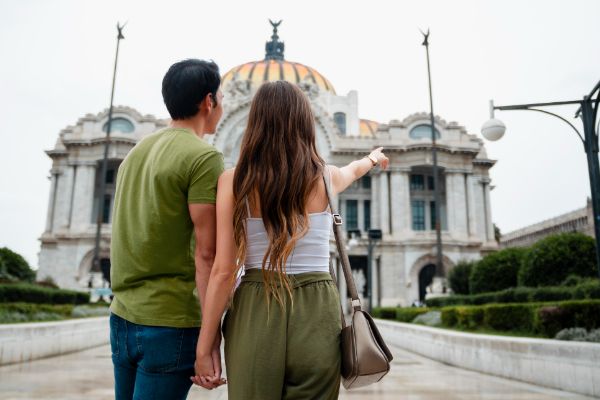
This also applies to artistic and civic spaces. The Palacio de Bellas Artes, for example, is not just a beautiful building. UNESCO includes it among the important public monuments that help define the historic center, and official tourism presents it as the country’s principal fine arts institution. A private guide can help travelers see how that site fits into the story of modern Mexican identity, muralism, public culture, and downtown Mexico City. Without that context, many visitors admire Bellas Artes only from the outside and miss much of what makes it important.
It can save time, energy, and decision fatigue
Hiring a private guide is not only about history or interpretation. It is also about using limited travel time well. Official Mexico City tourism material makes clear just how much there is to choose from, from hundreds of cultural points on the city’s historical sites map to major museums, archaeological zones, and themed walking routes throughout the capital. In a city that large, even deciding where to begin can become exhausting.
That is especially true for first-time visitors. Many travelers arrive with a short list of famous names but no real plan for how to combine them intelligently. A private guide reduces that decision fatigue. Instead of spending a large part of the day figuring out logistics, comparing routes, and wondering what is worth your energy, you can focus on the actual experience. In practice, that often means visiting fewer places but understanding them much better.
There are also practical cases where guidance matters because access and timing are not always obvious. Official city tourism notes, for example, that visits to the National Palace are by guided tour only and that prior reservations should be requested. Details like that can easily affect a day’s planning. A more intentional approach helps travelers avoid frustration and build a route that actually works in real life, not just on a wish list.
Language and cultural context matter more than many travelers expect
Even travelers who are comfortable navigating internationally often discover that Mexico City makes more sense when someone explains its cultural codes. This is not only a matter of translation. It is about meaning. The city’s history is full of names, symbols, events, and public references that can easily seem familiar but still be misunderstood. Mexico City tourism’s history museum guidance notes that many international visitors arrive with only partial knowledge of figures and periods, then realize that understanding the city more deeply takes patience and interpretation.
A private guide helps bridge that distance. That can mean explaining the difference between Mexica and “Aztec,” clarifying why certain monuments matter politically, or helping a traveler understand how art, religion, archaeology, and public life overlap in the city. The value of this is not academic formality. It is emotional clarity. Once travelers understand what they are seeing, the city becomes far more vivid and far less abstract.
This is especially helpful for English-speaking travelers who want more than a basic tourist overview. Official tourism pages are full of walking routes, museums, and major landmarks, but the city’s real richness often lies in what joins them together. Language support matters, of course, but cultural interpretation matters even more. That is why a knowledgeable private guide often improves not just comprehension, but the entire tone of the trip.

Private guiding is especially valuable for museums and archaeology
Few kinds of travel benefit from private guiding as much as cultural travel. Mexico City tourism emphasizes the importance of places such as the National Museum of Anthropology, Chapultepec Castle, and the archaeological and historical heart of downtown. These are not passive attractions. They are places full of symbolism, chronology, and overlapping meanings. The Anthropology Museum alone is presented as a must-see for visitors from around the world, while the city’s archaeological and history offerings are repeatedly described as central to understanding Mexico City.
A museum visit without context can still be beautiful, but it can also become tiring very quickly. This is especially true in a large museum where visitors are surrounded by extraordinary objects yet may not know what deserves the most attention. A private guide can curate the experience, highlight the most important pieces, and connect what you see in one gallery to places you may visit later in the city. That kind of structure usually leads to a much better visit than trying to absorb everything at once.
The same is true for archaeology. Mexico City tourism notes the city’s 25 archaeological sites, and UNESCO highlights the historic center’s extraordinary relationship to the remains of Tenochtitlan. Archaeological places are often most meaningful when someone helps explain what is no longer visible, how the site once functioned, and why it matters in the larger story of Mexico. Without that, some travelers admire the site but do not fully grasp it. With interpretation, the same place can become unforgettable.
It is not only for luxury travelers
Some people still think private guiding is only for luxury travel. In reality, it often makes sense for travelers who care more about depth than quantity. A private guide is not just about comfort or exclusivity. It can also be about focus. In a city with nearly 200 museums, major archaeological sites, dense historic districts, and multiple world-class landmarks, trying to do everything independently can lead to a fragmented experience. Choosing one well-designed guided day can sometimes deliver more value than several unguided days spent moving without a clear framework.
This is particularly true for travelers with limited time. If someone only has one or two days in Mexico City, the cost of confusion is high. Time lost to indecision, poor sequencing, or shallow visits cannot be recovered. A private guide can help make that short stay feel intentional and far more satisfying. The value is not only efficiency. It is the feeling that your trip had shape, meaning, and memory rather than just motion.
What to look for in a good private guide in Mexico City
Not every guide offers the same kind of experience, so it helps to know what matters most. In a city like Mexico City, a strong guide should be able to do more than recite facts. The best fit is usually someone who can interpret history clearly, adapt the pace to the traveler, and connect major places into a coherent story. Official tourism recommendations that highlight expert-led private experiences emphasize guides with knowledge of Mexican history, architecture, art, and culture. That combination is exactly what makes guided travel meaningful here.
It also helps to choose someone whose style matches the kind of traveler you are. Some people want a broad introduction. Others want archaeology, museums, downtown history, or a more personal cultural experience. The most memorable private tours are usually the ones that feel like they were designed for the traveler, not copied from a generic script. In a place as layered as Mexico City, that flexibility matters a lot.
Why this kind of experience stays with travelers longer
The biggest advantage of private guiding is not that it makes travel easier, although it often does. The biggest advantage is that it makes travel more memorable. A traveler may forget the order of streets or the name of a plaza, but they usually remember the moment when a city suddenly made sense. In Mexico City, those moments often come when someone helps explain how an archaeological site connects to a museum, how a palace connects to a political era, or how a public artwork reflects national identity. That is when the city stops being only impressive and starts becoming meaningful.
That is also why guided cultural travel tends to linger. You are not only collecting stops. You are building understanding. And in a city with the historical depth of Mexico City, understanding is often the thing that transforms a good trip into an exceptional one.

Final thoughts
Hiring a private guide in Mexico City can completely change your trip because this is a city that rewards interpretation, structure, and cultural context. With nearly 200 museums, 25 archaeological sites, a UNESCO-listed historic center, and some of the most important museums and monuments in the country, Mexico City offers far more than most visitors can fully understand on their own in a short stay. A private guide helps turn that abundance into something clear, personal, and memorable.
If you want to experience Mexico City with more depth, better context, and a more personal pace, explore the city with Cleyber Can Guide and discover why understanding the story behind the place can change the entire journey.