Why Teotihuacan matters so much
For many foreign travelers, Teotihuacan is one of the first ancient sites they associate with Mexico. The pyramids are famous, the landscape is dramatic, and the site is close enough to Mexico City to make it one of the most popular cultural excursions in the region. But Teotihuacan is much more than a scenic day trip. It is one of the most important pre-Hispanic cities in the Americas and one of Mexico’s great archaeological treasures. UNESCO describes it as a monumental urban center located about 48 kilometers northeast of Mexico City, recognized for its enormous ceremonial complexes, its urban planning, and its historic influence across Mesoamerica. UNESCO inscribed the Pre-Hispanic City of Teotihuacan on the World Heritage List in 1987.
That status matters because Teotihuacan was not a minor regional settlement. Official INAH information explains that it became a great Mesoamerican city with political, economic, commercial, religious, and cultural influence that reached distant regions, including places such as Tikal. The site is also presented as one of the most important pre-Hispanic urban centers ever discovered in Mexico and as material evidence of one of the best planned and most extensive cities of the ancient world. For travelers, that means this is not simply a place to admire large structures. It is a place that helps explain the scale, sophistication, and cultural depth of ancient Mexico.
For first-time visitors, this changes the way the experience feels. When travelers arrive without historical context, Teotihuacan can seem like “the place with the big pyramids.” Once they understand its role in ancient Mesoamerica, the visit becomes much richer. You stop seeing it as an isolated ruin and start seeing it as part of the larger story of Mexico, one that connects archaeology, mythology, architecture, religion, and cultural memory. That deeper understanding is exactly what turns a sightseeing stop into a meaningful experience.
It is not an Aztec city
One of the most common misunderstandings among foreign travelers is the idea that Teotihuacan was built by the Aztecs. It was not. By the time the Mexica, often called the Aztecs, rose to power in central Mexico, Teotihuacan had already been abandoned for centuries. What the Mexica did give the place was its famous name. According to official INAH material, the site’s current name comes from Nahuatl and is commonly interpreted as “the place where men become gods” or “the place where the gods were created.”
This distinction is important because it helps visitors avoid one of the most common oversimplifications in Mexican history. Ancient central Mexico was not shaped by one single civilization. Teotihuacan belonged to a much earlier period and represented a major urban tradition of its own. UNESCO notes that the city’s long history of exploration dates back to the nineteenth century, while INAH emphasizes its importance as a major pre-Hispanic center with its own identity and influence. So when travelers visit Teotihuacan, they are not visiting an Aztec capital. They are visiting the remains of a much older city that later peoples also regarded as sacred and extraordinary.
For foreign visitors, understanding this one point immediately improves the entire visit. It makes the site feel more complex and more intellectually interesting. Mexico’s past is not one straight line. It is a layered civilization with different peoples, different cities, and different periods of power. Teotihuacan is one of the clearest examples of that complexity, which is one reason it is such an essential destination for culturally curious travelers.
What makes the site so impressive
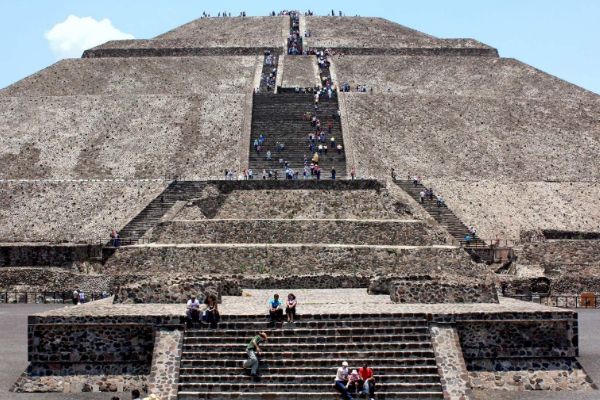
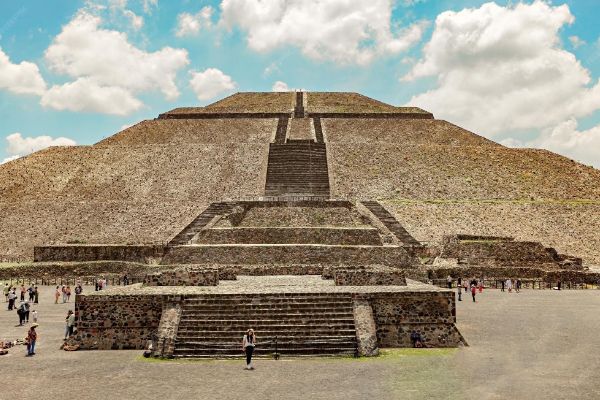
The first thing many visitors notice is scale. Teotihuacan was designed with monumental ambition, and that sense of size is still one of its defining qualities. UNESCO highlights the vast dimensions of its monuments, especially the Pyramid of the Sun, the Pyramid of the Moon, and the Temple of Quetzalcoatl, all arranged within a geometric and symbolic urban plan. This was not a random settlement that happened to include a few large buildings. It was a carefully structured city built to communicate order, power, and cosmological meaning.
Another reason the site feels so powerful is the layout. The long central axis commonly known as the Avenue of the Dead gives visitors a strong visual and spatial sense of the city’s design. As you move through the site, you are not simply walking from monument to monument. You are moving through an urban plan that once organized ceremonial, political, and social life on a very large scale. That is why Teotihuacan feels different from many other archaeological sites. It has the presence of a true ancient city.
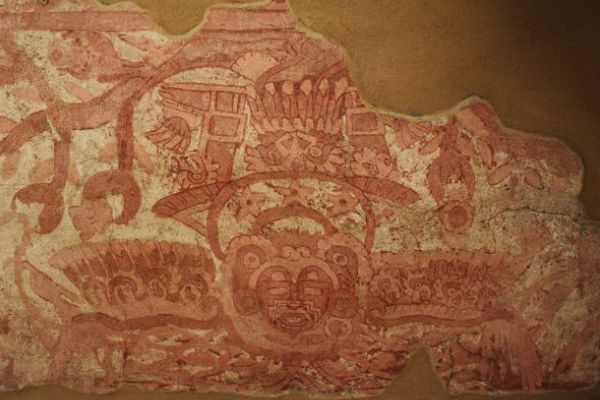
Teotihuacan is also impressive because it was not only monumental but artistic. Official INAH information notes the importance of its mural paintings and the site’s broader cultural richness. The archaeological zone today includes two specialized museums: the Museum of Teotihuacan Culture and the Beatriz de la Fuente Museum of Teotihuacan Murals, both of which help visitors understand dimensions of the city that are easy to miss if they focus only on the pyramids.
The main places you should understand before arriving
Before visiting, it helps to know the three most recognizable elements of the site. The first is the Pyramid of the Sun, one of the most iconic ancient monuments in Mexico. It dominates the landscape and often becomes the visual symbol of Teotihuacan in travel photography and popular imagination. UNESCO specifically identifies it as one of the major monumental features that define the site’s universal value.
The second is the Pyramid of the Moon, which anchors the northern end of the ceremonial axis and gives the site one of its most dramatic perspectives. In May 2025, INAH announced that visitors were once again allowed to ascend the first section of the Pyramid of the Moon after conservation and improvement work, while access remained limited in order to protect the monument. That means travelers should not assume full access across ancient structures, but they can still enjoy part of this important monument under current site rules.
The third is the Temple of Quetzalcoatl, also associated with La Ciudadela, which is crucial for understanding the ceremonial and symbolic complexity of Teotihuacan. Even travelers who are not specialists can benefit from recognizing that the site was not built around only two great pyramids. It was a broader ceremonial and urban complex, and that is why reducing Teotihuacan to one postcard image never does it justice.
Why the experience is bigger than the pyramids
A lot of tourists arrive thinking the main goal is to “see the pyramids.” In reality, Teotihuacan is much more rewarding when experienced as a city instead of a photo stop. Official INAH information emphasizes not only its monumental architecture but also its mural painting, living areas, museums, and cultural significance. This broader perspective matters because the site was once a functioning urban world, not just a ceremonial backdrop.
The museums on site are a good example of this. The Museum of Teotihuacan Culture presents archaeological material and interpretation connected to the city, while the Museum of Teotihuacan Murals “Beatriz de la Fuente” highlights another side of the ancient city by showing that many buildings were once decorated with extensive painting. For travelers who want more than quick impressions, these spaces help reconstruct a more vivid image of Teotihuacan as a lived environment full of color, symbolism, and artistic sophistication.
This is one reason Teotihuacan leaves such a strong impression on people who are genuinely interested in culture. The site invites imagination, but it also rewards careful observation. The best visits are rarely the fastest ones. They are the ones in which travelers begin to ask better questions: Who lived here? What beliefs shaped this city? Why was it planned this way? How far did its influence reach? Once those questions begin, Teotihuacan becomes much more than a stop on the itinerary. It becomes one of the intellectual highlights of a trip to Mexico.
Practical things foreign travelers should know
Teotihuacan is easy to reach from Mexico City, but a little planning makes a big difference. Official Mexico City tourism information explains that many international visitors arrive by private transport or by bus, and it specifically points to Autobuses del Norte as the most affordable option for many travelers. Visit Mexico also recommends arriving early, wearing comfortable shoes, and protecting yourself from the sun.
Official INAH information currently lists the archaeological zone as open Monday through Sunday from 8:00 a.m. to 5:00 p.m., with last access at 4:30 p.m. The official entrance fee shown by INAH is 210 MXN, with discounted or free admission categories applying in certain cases. The site also lists practical visitor services such as parking, cloakroom, toilets, shop access, and guided tours.
It is also worth knowing that Teotihuacan is a large open-air site. Official visitor guidance and tourism materials recommend sunscreen, a hat, comfortable clothes, and good walking shoes. Midday heat and exposure can make the experience more tiring than some travelers expect, especially if they are coming from cooler climates or are trying to combine the visit with too many other activities in the same day. Arriving prepared is part of enjoying the site properly.
Foreign travelers should also keep expectations realistic about site rules. Heritage protection is taken seriously, and access to monuments may be limited depending on conservation needs and safety conditions. That is not a disappointment. It is part of preserving one of the world’s great archaeological sites for future generations. The smartest visitors understand that responsible travel sometimes means seeing more while touching less.
How to visit Teotihuacan in a smarter way
The smartest way to visit Teotihuacan is not to treat it like a rushed checklist destination. Because it is close to Mexico City, many travelers assume it can be handled casually. But this is one of the most important archaeological sites in the country, and it deserves a more intentional approach. A better visit usually starts with an early departure, a clear understanding of the site’s historical importance, and enough time to move through the main areas without feeling hurried. Official tourism guidance consistently points to arriving early as a practical advantage, especially before the strongest heat and the busiest visitor hours.
It also helps to think in terms of interpretation rather than speed. Some travelers spend the whole visit trying to get the “perfect pyramid photo” and leave without understanding what they saw. Others slow down, learn the main story of the site, and come away with a far more memorable experience. Teotihuacan rewards that second approach. Its value lies not only in its visual drama, but in the cultural world it opens up.
A smarter visit also means connecting Teotihuacan to the rest of a Mexico City itinerary. Once travelers understand this site better, they often appreciate museums, urban archaeology, and historic places in the capital much more deeply. Teotihuacan does not compete with the city. It enriches the city. That is why it works so well as part of a broader cultural journey through central Mexico.
Why visiting with a private guide makes a difference
Teotihuacan is impressive on your own, but it becomes much more meaningful with expert guidance. This is especially true for foreign travelers who may not be familiar with the historical distinctions between Teotihuacan, the Mexica, and other Mesoamerican cultures. A private guide helps organize the site into a clear story, explains what matters most, and turns monuments into something more than scenery. Instead of just hearing names, you begin to understand relationships, meanings, and context. That is where the real value of the visit often begins. The size and complexity of the site make this kind of interpretation especially useful.
A guided experience also helps travelers use their time better. Teotihuacan is large, and not every visitor knows where to focus first, what details are most important, or how to connect the site’s urban design to its religious and political significance. With the right guide, the visit feels more coherent, more personal, and far less overwhelming. Instead of leaving with fragments, you leave with a story.
For travelers who want Mexico to feel more understandable and more memorable, that difference matters. Seeing a site is one thing. Understanding it is something else entirely. Teotihuacan is exactly the kind of place where interpretation transforms the experience from impressive to unforgettable.