
Why Chapultepec Castle stands out so much
Few places in Mexico City combine history, symbolism, architecture, and panoramic views as powerfully as Chapultepec Castle. Official Mexico City tourism information describes it as one of the city’s premier museums and one of the highest places visitors can explore in the Valley of Mexico, while the museum’s official site identifies it as the home of the National Museum of History. That combination matters because visitors are not only seeing a beautiful building on a hill. They are entering a place that has served different political and cultural roles across centuries and now preserves major parts of Mexico’s historical memory.
For foreign travelers, that makes the castle especially compelling. It is visually striking from the outside, but the real value of the visit is how many layers of Mexican history come together in one place. Chapultepec Castle has been linked to viceregal power, military training, imperial life, presidential residence, and national historical interpretation. In other words, it is not just an elegant landmark. It is a building through which Mexico’s past can be read in a concrete and memorable way.
That is one reason the castle feels different from many other famous attractions. Some places are beautiful but limited to one moment in time. Chapultepec Castle is different because it changed repeatedly as Mexico changed. A traveler can come for the terrace views, the imperial rooms, the gardens, the murals, or the museum galleries and still leave with a much broader understanding of the country than expected.
The hill was important long before the castle
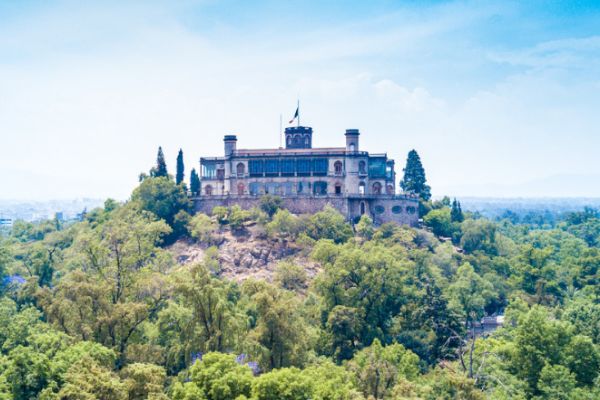
One of the most interesting things about Chapultepec Castle is that its importance did not begin with the castle itself. The official history of Chapultepec from INAH explains that the area has a history stretching back about three thousand years, with ceramics and burials from the Preclassic period connected to early settlement near Lake Texcoco. The same official source also notes that after the founding of Mexico-Tenochtitlan in 1325, Chapultepec was considered a sacred and strategic place because of the springs that supplied drinking water to the Mexica capital.
This makes the site much more interesting than a simple hilltop monument. Before it became associated with viceroys, emperors, presidents, or museum visitors, Chapultepec was already meaningful in the geography and imagination of central Mexico. Even the name reflects that deep past. INAH explains that “Chapultepec” comes from Nahuatl and refers to the “hill of the grasshopper.” That name alone gives the place a sense of continuity between the ancient landscape and the modern city that surrounds it today.
For visitors, this older background matters because it changes the way the castle is experienced. You are not just climbing to an eighteenth- or nineteenth-century building. You are entering a site that has carried symbolic and strategic importance for centuries. That deeper historical foundation is part of what gives Chapultepec Castle such a powerful atmosphere.
From viceregal project to military landmark
The castle itself began during the viceregal period. The official museum site states that construction began in 1785 during the government of Viceroy Bernardo de Gálvez, while the architecture section explains that a new palace was planned on top of the hill after an earlier pleasure residence on the slope had been destroyed. Although the original project did not fully prosper at first, the building remained significant and was later acquired by the city.
Its role changed dramatically in the nineteenth century. The architecture history on the museum’s official site explains that in 1833 the abandoned palace was designated as the headquarters of the Military College, and reconstruction began in 1841. One important addition from that phase was a tower, called the Caballero Alto, which helped give the building the appearance of a fortified structure and contributed to the place being called a “castle.”
The site’s military association became especially significant because of the Battle of Chapultepec in 1847 during the Mexican-American War. Mexico City tourism explains that the castle is especially remembered as the place connected to the Niños Héroes, the cadets who died defending the site and later became major symbols of patriotic memory in Mexico. The Alcázar area of the museum still includes a room dedicated to that battle, which helps visitors connect the building to one of the most emotionally charged episodes in nineteenth-century Mexican history.
For foreign travelers, this military chapter often comes as a surprise. Many arrive expecting a palace-like experience and discover that the building also played a central role in military education, conflict, and national memory. That contrast gives Chapultepec Castle more emotional weight than a purely decorative residence would have.
Why Maximilian and Carlota changed the place forever
If Chapultepec Castle feels especially elegant today, much of that impression comes from the period of Maximilian and Carlota. The official museum architecture history explains that the Alcázar acquired much of its current appearance when the Austrian archduke Maximilian of Habsburg and his wife Carlota lived there between 1864 and 1867 during the Second French Intervention. During that period, the building was transformed into a palace, and the gardens were redesigned.
The same official source adds fascinating details: the imperial couple had furniture, porcelain, silverware, portraits, tapestries, glassware, and other fine objects brought in to make the Alcázar a true palace. They also chose rooms facing east toward Mexico City and the old lake zone, which led to the creation of the panoramic terrace in front of their rooms. Those details help explain why the castle feels theatrical and refined rather than merely institutional.
This imperial layer matters because it gives the castle one of its strongest visual identities. Many visitors remember the terraces, gardens, long corridors, and restored rooms as much as they remember the museum galleries. The official Alcázar page states that the lower floor rooms are set to evoke the era of Maximilian and Carlota, while the upper floor reflects the later period when Porfirio Díaz and Carmen Romero Rubio used the building as a summer house. That means the castle allows travelers to step into recreated domestic and political worlds from two different eras of Mexican history.
For foreign visitors, this is often one of the most memorable parts of the experience. The castle is not simply full of labels and display cases. It also contains spaces that feel inhabited, staged, and emotionally legible. You can sense how the building functioned as a residence of power, not only as a later museum.
More than a castle: the National Museum of History
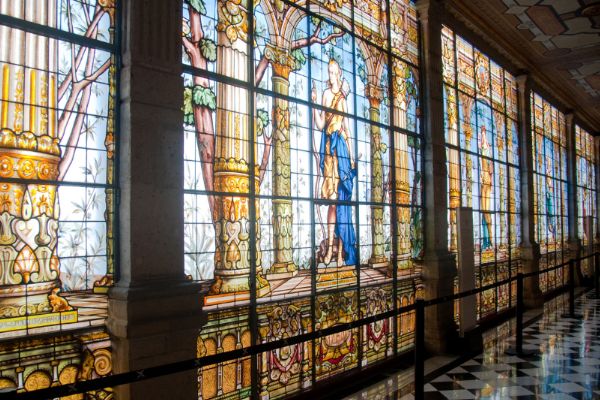
Today, Chapultepec Castle is much more than a historic structure with beautiful rooms. It houses the National Museum of History, whose official site says it preserves and presents the history of Mexico from the Conquest of Tenochtitlan to the Mexican Revolution. The museum has 12 permanent exhibition halls and 22 rooms in the Alcázar area, combining broader historical interpretation with recreated residential and political interiors.
That dual identity is one of the things that makes the visit so rich. In one part of the castle, visitors encounter galleries with objects, documents, and narratives representing major historical processes across centuries. In another, they move through more intimate spaces linked to imperial and presidential life. The result is a visit that feels broader than a palace tour but more personal than a conventional history museum.
The museum also includes murals by important Mexican artists. On the official murals page, INAH highlights works by Jorge González Camarena, Juan O’Gorman, and José Clemente Orozco, covering themes such as the conquest, independence, the Reform period, the Porfiriato, the Revolution, and the Constitution of 1917. These murals add another powerful layer to the visit because they do not merely decorate the building. They interpret Mexico’s past in bold visual form.
This is especially valuable for travelers who want to understand Mexico beyond surface impressions. Chapultepec Castle does not only show furniture, halls, and terraces. It presents a broad historical narrative while also allowing visitors to feel the atmosphere of power, ceremony, and change that shaped the country across different eras.
What makes the visit so memorable for foreign travelers
One reason foreign travelers remember Chapultepec Castle so strongly is the climb and the view. Mexico City tourism describes it as one of the highest points visitors can access in the valley and notes that it offers some of the city’s best views. That scenic reward gives the visit an immediate emotional payoff even before travelers begin to understand the deeper historical material inside.
But the castle stays in people’s memory for more than its viewpoint. It also sits within Chapultepec, one of the most important green and cultural areas of the capital. The official history of Chapultepec makes clear that the surrounding forest and hill have long been central to the region, while city tourism places the castle within a larger cultural environment that includes museums, park spaces, and other major attractions. That broader setting makes a castle visit feel like part of a much larger Mexico City experience rather than an isolated stop.
Foreign visitors also tend to connect quickly with the castle because it is easy to read visually. Even without extensive background knowledge, travelers can recognize that this was a place of ceremony, power, defense, and prestige. Then, as they move through the museum, that first impression becomes more precise. The building starts to explain Mexico’s story through architecture, interiors, collections, and symbolism all at once.
In that sense, Chapultepec Castle works especially well for first-time visitors to Mexico City. It offers beauty, history, orientation, and context in a single visit. A traveler can admire the terraces, enjoy the scenery, and still leave with a much stronger sense of Mexico’s political and cultural history than before.
Practical things visitors should know
If you plan to visit, official INAH information says Chapultepec Castle is open Tuesday through Sunday from 9:00 a.m. to 5:00 p.m. and closed on Mondays. The museum recommends arriving early and notes that the rooms begin to clear at 4:45 p.m. Official guidance also states that the visit takes at least an hour and a half, which is a useful baseline for planning.
The same official page lists the general admission price as 210 Mexican pesos. It also notes that entry is free on Sundays for the national public and for foreigners residing in Mexico, while several other categories, including children under 13, teachers, students with credentials, older adults, pensioners, and people with disabilities, may qualify for free admission. Since conditions can change, it is still wise to confirm details on the official museum site before going.
The museum is located in the First Section of Chapultepec Forest, and INAH provides location details and nearby Metro access on its official visitor page. Because the site sits on a hill, visitors should be prepared for some walking. Comfortable shoes, enough time, and a moderate pace usually make the experience much more enjoyable.
Another practical point is to avoid rushing. Chapultepec Castle rewards visitors who give themselves time. The galleries, Alcázar rooms, terraces, gardens, and mural spaces create a layered visit, so treating it as a quick photo stop usually means missing what makes it special. A slower approach almost always leads to a better experience.
Why a private guide makes the experience better
Chapultepec Castle is beautiful on its own, but a guided visit can make it dramatically more meaningful. This is the kind of place where labels and room names only tell part of the story. A private guide can explain how the building changed from a viceregal project into a military institution, why the imperial period reshaped the castle’s identity, how the National Museum of History fits into Mexico’s broader historical narrative, and what details are easiest to miss without context. All of those layers are present in the official museum and tourism material, but they become far more memorable when connected into one coherent story.
A guide also helps visitors use their time more intelligently. Because the castle combines museum halls, recreated residential rooms, battle memory, murals, and viewpoints, first-time visitors often do not know what to prioritize. A strong guided experience creates focus. It turns the visit from “a beautiful castle with a lot to see” into a clear journey through the political, cultural, and symbolic history of Mexico.
For foreign travelers especially, that context can make a huge difference. Understanding the castle’s place within Mexico City and within Mexican history often changes how travelers experience the rest of the city as well. After visiting Chapultepec Castle with interpretation, many later sites begin to feel less disconnected and much easier to understand.
Final thoughts
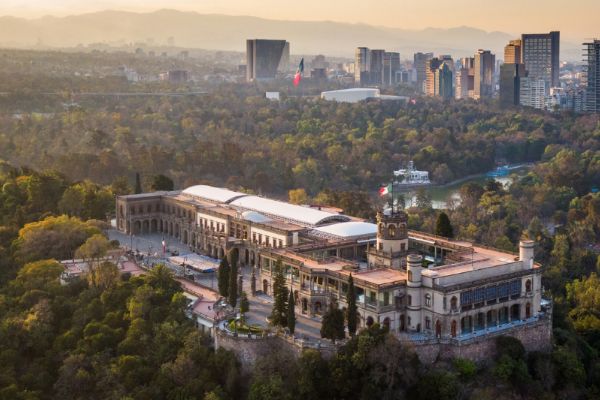
What makes Chapultepec Castle Mexico City so fascinating is not just its appearance. It is the rare kind of place where landscape, architecture, historical memory, and national identity come together in a way visitors can actually feel. Built on a hill that was already important long before the castle existed, transformed across different political eras, and now home to the National Museum of History, it offers one of the richest cultural visits in the city.
For travelers who want more than a quick photo and a famous view, Chapultepec Castle offers something much better: perspective. It helps explain Mexico City from above, but it also helps explain Mexico through the stories preserved inside its walls. To experience it with more context, more meaning, and a more personal cultural perspective, explore Mexico City with Cleyber Can Guide.