Why this museum matters so much
For many travelers, Mexico City is exciting from the very first moment: the food, the energy, the traffic, the architecture, the colors, and the scale of the city all make a strong impression. But for first-time visitors, there is often one important challenge: Mexico can feel overwhelming if you do not yet understand its historical layers. That is exactly why the National Museum of Anthropology matters so much. It is not just another museum stop on a tourist checklist. It is one of the best places to build context before exploring the rest of the city, because it brings together the civilizations, symbols, and cultural traditions that shaped Mexico long before the modern capital existed. The museum is widely recognized as one of the leading museums in the country and the world, and official Mexico City tourism information describes it as the most visited museum in Mexico.
For a first-time visitor, that context changes everything. After walking through this museum, names such as Teotihuacan, Mexica, Maya, Oaxaca, and Gulf Coast cultures no longer feel abstract. They begin to connect. The sculptures, maps, ritual objects, and curated galleries help visitors understand that Mexico is not one story but many stories layered together across centuries. Instead of seeing Mexico City as simply a large modern capital, you begin to see it as a place built on deep indigenous memory, colonial transformation, and continuing cultural identity. That shift in understanding is one of the biggest reasons this museum deserves a top place in any first visit to Mexico City.
A museum that helps you understand Mexico
One of the greatest strengths of the National Museum of Anthropology is that it does not merely display beautiful objects. It helps visitors understand how those objects fit into the larger history of the country. Official museum and tourism sources explain that the institution was created as part of a broader effort to preserve, study, and present Mexico’s archaeological and ethnographic heritage, and its roots go back to the early nineteenth century through the development of the earlier National Museum of Mexico. The current museum opened in Chapultepec Park on September 17, 1964, after earlier collections had outgrown the institution’s former site on Moneda Street.
That history matters because it reveals the mission behind the museum. This is not a random collection of ancient treasures. It is a national project that helps explain how Mexico has understood itself over time. According to the official museum history, the institution grew from the need to gather knowledge about the country, its origins, and its cultural development. Later, the present museum was designed not as a simple warehouse of artifacts but as a meaningful cultural space that could honor the enduring values of pre-Hispanic peoples while using modern design and museum practice. In other words, the museum itself reflects a major idea: that indigenous history is central to Mexico’s identity, not secondary to it.
That is why the museum is so useful for foreign visitors. Many international travelers arrive with only a partial picture of Mexico. They may know something about tacos, Frida Kahlo, the Aztecs, or the Day of the Dead, but those pieces are often disconnected. At the National Museum of Anthropology, those fragments begin to form a coherent picture. You start to understand the relationship between ancient cities, sacred symbols, ritual practice, political power, and living indigenous cultures. For a traveler who wants more than surface-level tourism, this museum is one of the best starting points in the entire country.
What you will see inside
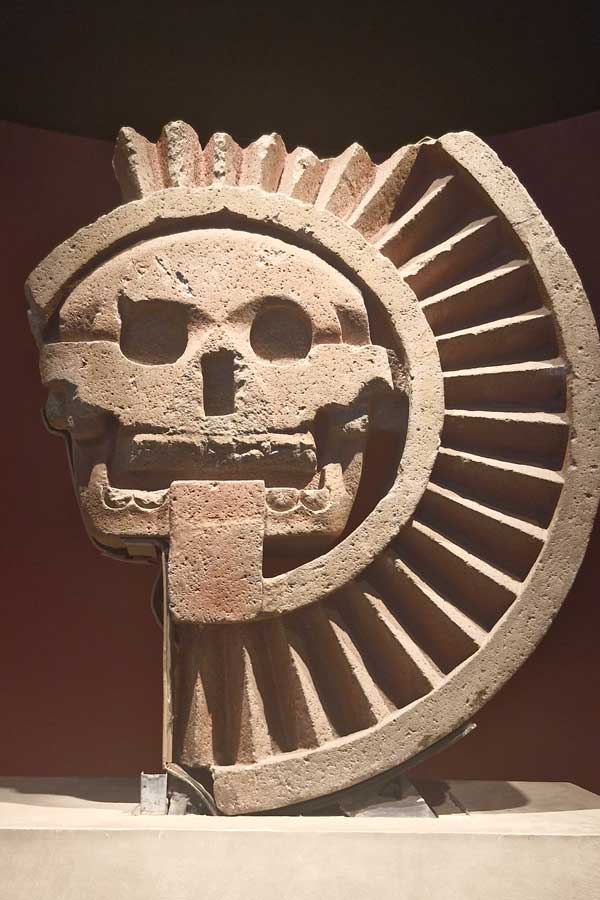
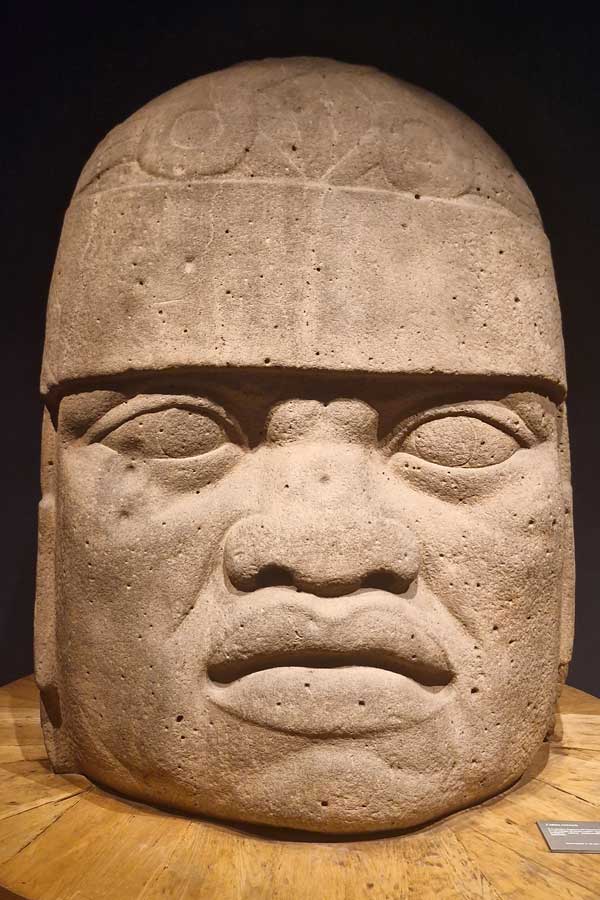
The museum is organized in a way that makes this journey possible. Official tourism information explains that the National Museum of Anthropology is divided into two major sections, with the anthropology section occupying the ground floor and multiple galleries presenting the development of ancient cultures across Mexico. The galleries include themes such as the peopling of the Americas, the pre-classical period in the central highlands, Teotihuacan, the Toltecs, Mexica culture, Oaxaca, the Gulf Coast, Maya culture, and the cultures of the west and north. Official museum information also notes that the wider institution includes permanent galleries and exhibition rooms centered on both pre-Hispanic art and the ethnographic history of Mexico’s regions.
This means a first-time visitor gets more than a narrow lesson on one civilization. You can move from one world to another and begin to see both differences and connections. In one area, you encounter monumental stone sculpture and state power. In another, you see finely detailed ritual objects, ceramics, ornaments, or representations of everyday life. The experience helps you understand that Mesoamerica was never culturally uniform. It contained many traditions, many regional developments, and many ways of seeing the universe. The museum’s structure makes that complexity easier to follow, even for people who do not arrive with a strong background in Mexican history.
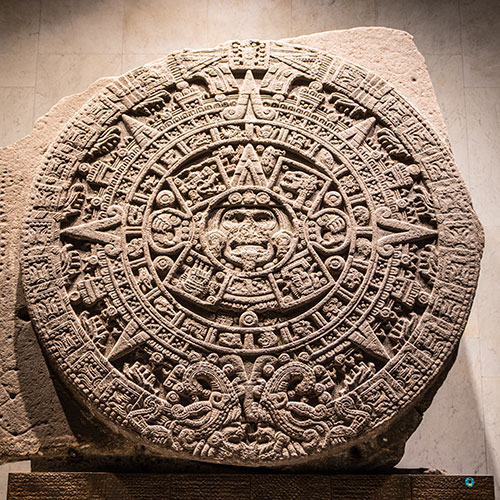
One of the most famous highlights is the Sun Stone, often popularly called the Aztec calendar stone, which official Mexico City tourism material identifies as dominating the museum’s central hall. The collection’s deeper history is also linked to late eighteenth-century discoveries in Mexico City, including the uncovering of the Sun Stone and other monumental works such as Coatlicue and the Tizoc Stone, finds that helped inspire stronger interest in protecting Mexico’s cultural heritage. For visitors, this creates a powerful moment: you are not looking at a small fragment behind glass, but at objects that have shaped the visual imagination of Mexico itself.
Even before entering, many visitors are struck by the monumental stone sculpture commonly known as the Tlaloc Monolith outside the museum. Official Mexico City information describes it as one of the city’s most photographed public artworks and notes the long-standing debate about whether the figure may represent Tlaloc or possibly Chalchiuhtlicue. It was moved to its present location in the 1960s, and its arrival became part of Mexico City lore after a dramatic rainstorm accompanied the transfer. That sculpture alone already tells visitors something important: in Mexico City, history does not stay hidden indoors. It is part of the landscape.
The building is part of the experience
Another reason this museum stands out is that the building itself is unforgettable. Official sources explain that the museum was built between 1963 and 1964 under the direction of architect Pedro Ramírez Vázquez, and its architecture has become one of its defining features. The design incorporates references to pre-Hispanic symbolism and spatial ideas, while still feeling modern and monumental. The famous suspended roof in the central courtyard is one of the most recognizable features of the museum and serves as a visual anchor for the entire experience.
This matters for travelers because the museum does not feel like a purely academic or sterile space. It feels ceremonial. The courtyard, the stone, the open circulation, and the dramatic proportions all prepare you to experience the collection in a different way. The museum’s official history explains that the project was conceived with respect for pre-Hispanic traditions and that stone was chosen as a primary material in order to evoke that heritage. So even the architectural language reinforces the idea that visitors are entering a space devoted to memory, continuity, and identity.
For first-time visitors, that architectural impact can be especially helpful. A strong museum building can organize attention and create emotional focus. At the National Museum of Anthropology, the environment encourages you to slow down. That is important because Mexico City often moves fast. Outside, the city is energetic and intense. Inside, the museum creates a pause. It gives you room to observe, compare, and absorb. That alone makes it one of the most rewarding cultural experiences in the capital.
Why first-time visitors benefit the most
Some museums are better for specialists or repeat travelers. This one is excellent for beginners. That may sound surprising given its size and depth, but the museum works especially well for first-time visitors because it offers a broad and meaningful overview. Instead of sending you straight into disconnected sites around the city, it gives you a cultural framework first. Once you have seen the Mexica galleries, for example, places like Templo Mayor, the Historic Center, or even symbols found in public art around the city become easier to understand. Once you have seen material related to Teotihuacan, a future visit to that archaeological site becomes much more meaningful.
The museum also helps correct common misconceptions. Many foreign visitors arrive with the habit of using “Aztec” as a catch-all word for ancient central Mexico. The museum quickly shows that the story is larger and more nuanced, with many cultural traditions represented across regions and periods. It also helps visitors realize that Mexico’s indigenous identity is not just a matter of the distant past. Official museum information makes clear that archaeology and ethnography are both central to the institution. That combination is powerful because it reminds visitors that culture in Mexico is both ancient and living.
There is another reason first-time visitors benefit so much: confidence. Entering a major city in another country can be intimidating, especially when the history is vast and the language is not your first language. A well-planned visit to this museum gives travelers a sense of orientation. It helps them feel that they are no longer just seeing impressive things, but beginning to understand them. That kind of confidence often transforms the rest of the trip. A traveler who understands more usually enjoys more.
How to visit the museum the smart way
A smart visit begins with realistic expectations. This is not the kind of museum most people should try to “finish” in a rush. Official sources describe extensive permanent galleries and major thematic sections, which means that even a well-paced morning or afternoon will involve choices. For first-time visitors, it is usually better to focus on understanding the main cultural story rather than trying to stop at every display. A shorter, intentional visit can be much more rewarding than a fast, exhausting one.
Practical planning also helps. Official museum information lists the museum in Chapultepec, at Paseo de la Reforma and Calzada Gandhi, and notes access by nearby Metro and Metrobús options. Official information also mentions services and visitor support such as accessibility features, cloakroom availability, parking information, and rules about food, pets, and smoking. Mexico City tourism information currently lists the museum as open Tuesday through Sunday from 9 a.m. to 5 p.m., though travelers should always confirm schedules on the official site before visiting in case of updates.
Another smart strategy is to connect the museum to the rest of your day. Because the museum sits in Chapultepec and near other major cultural points, it works well as part of a broader historical itinerary. But it should not be treated like a quick stop squeezed between unrelated attractions. The more focused your visit, the more you gain from it. This is one of those places where quality matters more than quantity. A traveler who leaves with three or four clear ideas about Mexico’s history will often gain more than someone who photographs everything and understands very little.
Why a private guide can transform the visit
The National Museum of Anthropology is impressive on its own, but for many foreign visitors the experience becomes dramatically better with expert interpretation. A great museum can still be difficult to read without context. Labels help, but they rarely connect everything in a human, memorable way. A private guide can explain why a certain gallery matters, how one civilization relates to another, why a sculpture is symbolically important, or how museum knowledge connects to places you may visit later in Mexico City, such as Templo Mayor, Chapultepec Castle, or the Historic Center. Those connections make the experience more personal and much easier to remember. The museum’s official structure, with multiple galleries spanning different cultures and periods, is exactly the kind of setting where guided interpretation adds real value.
For travelers visiting Mexico for the first time, that kind of guidance is especially useful. Instead of feeling lost in a large institution, you gain a curated route and a clearer story. You also avoid the common mistake of spending too much time in one section and missing the wider meaning of the museum. In a city as historically rich as Mexico City, understanding is often what turns a good visit into a memorable one. A private guiding experience can provide that understanding in a way that feels focused, flexible, and far more engaging than simply walking through the galleries alone.
Final thoughts
For first-time visitors to Mexico City, the National Museum of Anthropology is more than a famous attraction. It is one of the best gateways into Mexico itself. Its collections, its architecture, its historical depth, and its role in shaping cultural understanding make it one of the most meaningful places to visit in the capital. It helps foreign travelers move beyond first impressions and begin to understand the civilizations, symbols, and identities that continue to shape the country today. That is why it deserves a place near the top of any Mexico City itinerary.
To experience Mexico City with more depth, context, and a more personal perspective, explore the city’s museums, archaeology, and historic sites with Cleyber Can Guide, your private guide in Mexico.