
Why Oaxaca leaves such a strong impression
Some places are memorable because they are visually spectacular. Others stay with travelers because they feel culturally dense, layered, and deeply human. Oaxaca belongs to the second category, although it is visually beautiful as well. For many foreign visitors, Oaxaca becomes one of the most unforgettable parts of a trip to Mexico because it offers a rare combination of history, food, traditions, craft culture, local identity, and everyday atmosphere. It does not feel like a destination built only for tourism. It feels like a place with a strong inner life that travelers are lucky enough to witness.
That is one of the main reasons Oaxaca fascinates people from so many different countries. A visitor may arrive attracted by its famous cuisine or by the images of colorful streets and artisan markets, but then discover that the real depth of the destination lies in how strongly culture is still lived there. In Oaxaca, traditions do not feel like background decoration added for visitors. They feel embedded in neighborhoods, families, celebrations, workshops, food, and community life. That makes the destination especially attractive to travelers who want more than beaches, quick sightseeing, or generic itineraries.
Oaxaca also matters because it challenges overly simplified ideas about Mexico. Many international travelers arrive with a narrow image of the country based on a few familiar references. Oaxaca quickly expands that picture. It shows a Mexico that is deeply regional, highly creative, proud of its indigenous roots, and full of local expressions that do not need to imitate global tourism trends in order to be fascinating. That cultural confidence is one of the reasons Oaxaca feels so distinctive.
A place where history feels alive
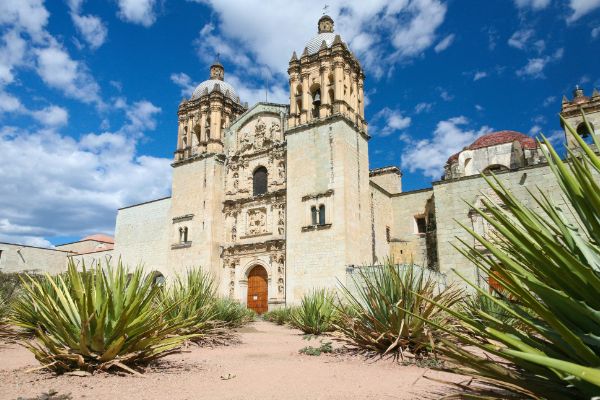
One of the first things many travelers notice about Oaxaca is that history does not feel distant there. It feels present. This happens at several levels. There is the visible history of colonial churches, plazas, streets, and buildings that give the city a strong architectural identity. But there is also a deeper historical layer connected to indigenous civilizations, pre-Hispanic memory, language, ritual, and regional continuity. Oaxaca is not interesting only because it has an old center. It is interesting because the past still shapes how the place feels.
This is part of what makes Oaxaca so rewarding for culturally curious travelers. In some destinations, history is reduced to a few plaques, museums, or preserved monuments. In Oaxaca, it is easier to feel how historical continuity still influences everyday life. A walk through the city can include colonial architecture, indigenous craft traditions, markets full of regional ingredients, references to ancient symbolism, and conversations about local festivals or family customs. Instead of encountering history in isolated pieces, travelers often feel that Oaxaca holds those pieces together in a more organic way.
That sense of continuity also gives the destination emotional depth. Visitors are not only looking at beautiful things. They are moving through a place where memory seems to have texture. That can be felt in the built environment, in the food, in the markets, in music, in ceremonies, and in the way many local stories are still told. This is one reason Oaxaca often feels more intimate than larger destinations. Its history is not only monumental. It is also lived at a human scale.
Oaxaca is one of the best places to understand regional Mexico
Another reason Oaxaca stands out is that it helps travelers understand that Mexico is not a single uniform culture. It is a country of regions, and Oaxaca is one of the clearest examples of that diversity. For foreign visitors, this can be an important shift in perspective. It becomes obvious that learning about Mexico requires learning about local identities, local ingredients, local customs, local forms of craftsmanship, and local ways of speaking and celebrating. Oaxaca teaches that lesson very clearly.
This regional strength is one of the destination’s greatest assets. Oaxaca does not depend on trying to look like somewhere else. Its identity feels specific. The food tastes rooted in place. The crafts feel tied to local communities and techniques. The celebrations feel connected to memory and collective belonging. Even the rhythm of public life often feels different from the rhythm of larger Mexican cities. That specificity is exactly what makes Oaxaca so attractive to travelers who are searching for authenticity, not just convenience.
For international visitors, Oaxaca can also be a powerful reminder that Mexico is far more varied than the usual tourism stereotypes suggest. A person who has visited only one part of Mexico may think they already understand the country. Oaxaca often proves otherwise. It reveals another cultural vocabulary, another atmosphere, another culinary language, and another way of experiencing public space. That is why it is such an important destination within the wider map of Mexican travel.
Food is one of the biggest reasons travelers fall in love with Oaxaca
It is impossible to talk about Oaxaca without talking about food. For many foreign travelers, Oaxacan cuisine is the first great point of fascination and often becomes one of the main reasons they want to return. But what makes Oaxaca’s food culture so memorable is not only flavor. It is the way food reflects place, memory, technique, and identity. Eating in Oaxaca often feels like participating in a living cultural tradition, not simply ordering a meal.
This is part of why the destination attracts so many travelers with a serious interest in food. Oaxaca is known for dishes and ingredients that have become iconic far beyond the region, yet they still feel rooted when experienced locally. Travelers quickly notice that Oaxacan food culture is not just about a few famous items. It is about markets, family methods, local ingredients, layered sauces, seasonal traditions, street snacks, chocolate, bread, mezcal, and the social role of eating itself. Food becomes a doorway into a much larger cultural understanding.
For first-time visitors, this is often one of the most joyful discoveries. They may come expecting “good Mexican food,” but leave realizing that Oaxacan cuisine has its own internal logic and depth. A meal can lead to questions about corn, local agriculture, ritual celebrations, regional variation, and the history of ingredients. That is what makes food in Oaxaca so compelling. It satisfies curiosity as much as appetite.
Food also helps travelers connect with Oaxaca emotionally. A city can be admired for its architecture or respected for its historical importance, but food creates a more immediate bond. It invites people into daily life. Markets, street food stands, family-style dining rooms, and local specialties often become some of the most memorable parts of a trip because they allow visitors to experience culture in a direct and sensory way. In Oaxaca, that experience is especially strong.
Traditions and celebrations feel deeply rooted
One of the strongest reasons Oaxaca is considered such a fascinating cultural destination is the depth of its traditions. Travelers often feel this quickly, whether they arrive during a major celebration or simply spend time observing daily life in neighborhoods and markets. The atmosphere suggests that festivals, rituals, music, dress, processions, and community practices are not marginal or ornamental. They remain central to how many people understand local identity.
This is one of the things that makes Oaxaca so different from destinations where traditions are presented only as performances for outsiders. In Oaxaca, celebrations often feel connected to family life, neighborhood pride, religion, memory, and collective participation. That does not mean every event is easily accessible or fully understandable to visitors, but it does mean travelers can sense that the culture they are witnessing has roots. That depth is what many people find so moving.
For foreign travelers, this can be one of the most eye-opening parts of the experience. It becomes clear that culture in Oaxaca is not only stored in museums or protected monuments. It is carried forward by communities. That includes everything from large public events to smaller customs that shape local time and social life. The result is a destination that often feels culturally alive in a way that is hard to imitate.
Traditions also help explain why Oaxaca often feels emotionally rich. Visitors are not only consuming attractions. They are entering spaces shaped by long memory. This is especially meaningful for travelers who are tired of tourism experiences that feel generic or interchangeable. Oaxaca offers the opposite. Its traditions make it feel specific, grounded, and memorable.
Crafts and visual culture are part of everyday life
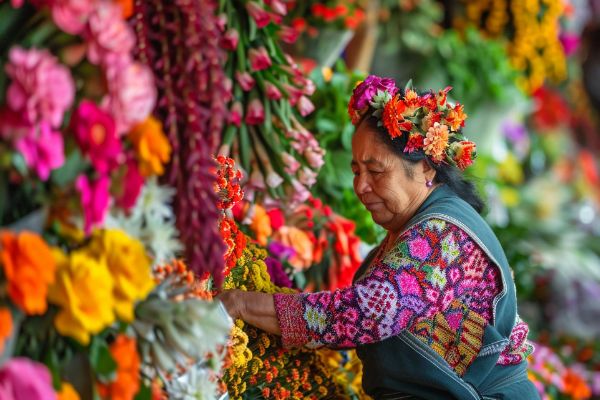
Another major reason Oaxaca fascinates travelers is its craft culture. In many destinations, artisan work is something you encounter in a gift shop at the end of the day. In Oaxaca, craft traditions often feel much closer to the center of cultural life. Textiles, pottery, carving, embroidery, hand-made objects, and decorative traditions are not just items for sale. They often represent inherited knowledge, regional aesthetics, identity, and skill passed across generations.
For foreign visitors, this can be one of the most beautiful and revealing aspects of the trip. Markets and workshops are not interesting only because they are colorful. They are interesting because they show how creativity, labor, and local tradition continue to shape everyday life. A crafted object in Oaxaca can feel much more meaningful once travelers understand that it may carry regional symbolism, family methods, or a connection to a specific town or community.
This visual richness also affects the destination as a whole. Oaxaca often feels artistically alive even when travelers are simply walking down a street. Colors, textures, fabrics, painted walls, market displays, pottery, and decorative details contribute to a strong sense of place. That is one reason so many visitors describe Oaxaca as inspiring. It is not only beautiful in a polished or curated sense. It is visually expressive in a more grounded and cultural way.
Craft culture also invites slower travel. It encourages people to ask questions, look closely, and appreciate process rather than only finished products. For travelers who want to understand Mexico through human work and inherited tradition, Oaxaca offers an especially rich experience.
Oaxaca offers a different rhythm of travel
One reason Oaxaca becomes such a favorite among foreign visitors is that it offers a different rhythm from larger cities. The destination still has movement, energy, and cultural intensity, but many travelers feel that it allows for a more attentive kind of travel. Streets invite walking. Meals invite lingering. Markets invite browsing. Public spaces invite sitting and observing. This change of rhythm can be deeply appealing, especially after time spent in more overwhelming urban environments.
That slower pace does not mean there is less to experience. In fact, it often allows travelers to experience more deeply. Instead of rushing between oversized landmarks, people may spend more time noticing textures, conversations, local foods, architectural details, workshop spaces, or the atmosphere of a square at a particular hour. Oaxaca rewards that kind of attention. It is a place where slowing down often improves understanding.
For culturally oriented travelers, this matters a great deal. A destination with a slower and more human rhythm often makes it easier to connect with local life rather than simply passing through it. Oaxaca’s scale and atmosphere help create those opportunities. Visitors often remember not only the “big” highlights, but also the quieter moments: a market stall, a church courtyard, a street corner, a meal, a conversation, a local tradition observed at the right moment.
That rhythm is one reason Oaxaca feels so complete as a destination. It offers cultural richness without demanding that everything be consumed at high speed. For many travelers, that is exactly what makes the experience feel restorative as well as fascinating.
Why foreign travelers connect with Oaxaca so quickly
Foreign travelers often connect with Oaxaca very quickly because the destination works on both immediate and deeper levels. On the immediate level, it is attractive, walkable, flavorful, and visually memorable. You do not need advanced knowledge to enjoy it. But as the visit continues, Oaxaca reveals more depth. Food leads to history. Markets lead to questions about regional identity. Crafts lead to conversations about community and technique. Streets lead to curiosity about architecture, religion, and memory.
That combination is powerful. Some destinations are easy to enjoy but difficult to understand. Others are intellectually rich but not immediately welcoming. Oaxaca often manages to be both accessible and profound. This is one reason it appeals so strongly to foreign travelers who want meaningful experiences but do not necessarily arrive as specialists. The destination teaches through atmosphere as much as through formal interpretation.
Another reason for this quick connection is that Oaxaca feels emotionally legible. Even when travelers do not fully understand everything they are seeing, they can sense that the place has cultural confidence. That confidence is attractive. It creates trust. It suggests that the destination has something real to offer beyond surface tourism. Visitors often respond strongly to places that seem grounded in themselves, and Oaxaca gives that impression very clearly.
How to experience Oaxaca in a deeper way
The best way to experience Oaxaca is not to treat it like a list of attractions to complete as fast as possible. It is a place that rewards curiosity, patience, and attention to context. Travelers who slow down, ask questions, and remain open to local layers usually gain much more than those who only collect photos and restaurant names. Oaxaca is ideal for travelers who want to understand how food, history, craft, celebration, and regional identity connect.
One helpful approach is to combine major highlights with everyday cultural experiences. That means not only visiting famous places, but also spending time in markets, paying attention to local materials, learning about regional traditions, and understanding how neighborhoods function. The destination becomes much richer when visitors move beyond a purely visual experience and begin to ask why things look, taste, sound, and feel the way they do.
This is also where thoughtful cultural guidance can make a big difference. A traveler on their own can absolutely enjoy Oaxaca, but interpretation often changes the quality of the experience. When someone helps explain the context behind a dish, a celebration, a crafted object, or a public space, the destination becomes far more coherent. Instead of isolated impressions, travelers begin to build a real understanding of the place.
That deeper way of traveling also tends to create stronger memories. Oaxaca is one of those destinations where meaning matters. People remember it not only because it was beautiful, but because it felt rich with story and identity. That is why it rewards travelers who are willing to engage with it thoughtfully.

Final thoughts
Oaxaca cultural destination is one of Mexico’s most fascinating experiences because it brings together history, regional identity, food, traditions, craftsmanship, and everyday life in a way that feels both beautiful and deeply rooted. It shows travelers a Mexico that is creative, local, expressive, and culturally alive. Rather than offering only a series of attractions, Oaxaca offers a way of understanding how place, memory, and community shape daily life.
For foreign visitors who want more than a quick trip or a generic itinerary, Oaxaca is one of the most rewarding places in the country. It invites slower travel, deeper curiosity, and a stronger appreciation for Mexico’s regional richness. And for travelers exploring the country through culture, Oaxaca is one of the clearest reminders that Mexico is far more diverse, layered, and fascinating than many first-time visitors expect.
To discover Mexico with more context, meaning, and cultural depth, explore the country through experiences that help you understand what makes each place special with Cleyber Can Guide.