Why Xochimilco matters so much
For many foreign travelers, Xochimilco is one of the most recognizable places in Mexico City. The colorful trajineras, the music, and the canals create one of the most photographed experiences in the capital. But reducing Xochimilco to a boat ride misses what makes it truly special. UNESCO includes Xochimilco as part of the Historic Centre of Mexico City and Xochimilco World Heritage property and describes it as a place whose network of canals and artificial islands preserves an exceptional testimony to how the Aztec people created a habitat in a difficult lacustrine environment. UNESCO also notes that Xochimilco lies about 28 kilometers south of Mexico City and preserves characteristic urban and rural structures dating back to the sixteenth century and the colonial period.
That recognition matters because it shows that Xochimilco is not famous only for being fun or picturesque. It is internationally valued as a living cultural landscape. The official Mexico City tourism site explains that the borough protects canals, chinampas, and fourteen original settlements, while also preserving the lacustrine identity of the old Valley of Mexico. In other words, Xochimilco is one of the few places where travelers can still experience a surviving connection to the ancient lake world that once defined much of the basin of Mexico.
More than boats: a surviving cultural landscape
What makes Xochimilco cultural experience so remarkable is that it combines nature, agriculture, history, and community life in one place. UNESCO describes the lacustrine landscape of Xochimilco as the only reminder of traditional pre-Hispanic land use in the lagoons of the Mexico City basin and highlights that some chinampas, often called floating gardens, still survive within this network of canals. UNESCO further explains that parts of this half-natural, half-artificial environment are now an ecological reserve.
That description is important because it helps travelers understand that Xochimilco is not simply a leisure district. It is one of the last visible remnants of a much older environmental and agricultural system that once supported life in the Valley of Mexico. UNESCO even emphasizes that the chinampas represent an exceptional agricultural system shaped by the combination of environmental conditions and human creativity, and that their productivity and sustainability explain how this labor-intensive system survived over centuries.
Mexico City’s official tourism site reinforces this broader view. It explains that Xochimilco preserves the most important agricultural system in the basin and that navigating its canals allows visitors to see productive chinampas, greenhouses, and migratory birds alongside the better-known festive atmosphere of the trajineras. That mixture is exactly what makes the place so fascinating: Xochimilco is both a cultural attraction and a living landscape still tied to cultivation, water, and local identity.
The meaning of the canals and chinampas
To understand Xochimilco, travelers need to understand the canals and the chinampas. Official Mexico City information describes the chinampas as artificial islands created in shallow waters, predating the pre-Hispanic period and lining the canals. The city’s tourism page for Cuemanco also notes that trajineras were historically used to move goods through these waterways and even as far north as the historic center of Mexico City. That detail matters because it reminds visitors that these boats were not originally created for tourism. They belonged to a working landscape and to a real transportation system.
UNESCO goes even further by describing the chinampa system as one of the most productive and sustainable agricultural systems in the world. It stresses that this traditional system remains vulnerable today because of development pressure, contamination, groundwater extraction, abandonment, and changes in agricultural technology. That tension between survival and vulnerability is part of what gives Xochimilco such emotional and cultural weight. Travelers are not only visiting a beautiful place. They are witnessing a heritage landscape that still exists, but that also requires active care and protection.
For foreign visitors, this can completely change the tone of the experience. A trajinera ride becomes more meaningful when you realize you are floating through one of the last surviving fragments of an ancient water-based world. The canals stop feeling like a decorative backdrop and begin to feel like living evidence of how Mexico’s past continues to survive inside the present.
Why Xochimilco still feels alive
Another reason Xochimilco stands out is that it does not feel frozen in time. The official Mexico City tourism page describes the area as a place where residents continue to celebrate patron-saint festivals, agricultural ceremonies, and events of deep syncretism. It specifically highlights devotion to the Niñopa, a religious image that travels through Xochimilco homes throughout the year. That is a powerful reminder that Xochimilco is not merely preserved as a scenic attraction. It remains part of the everyday and ceremonial life of local communities.
This living quality is one of the biggest reasons the district fascinates visitors. In some heritage destinations, the past feels distant and carefully separated from daily life. In Xochimilco, the opposite often happens. Waterways, agriculture, religion, neighborhood identity, music, and tourism all coexist in the same landscape. UNESCO also notes that in both heritage components of the property, the past and the present are constantly and simultaneously visible. That observation feels especially true in Xochimilco.
For travelers, that creates a richer emotional response. Xochimilco is not just something to look at. It is something that still functions, still adapts, and still belongs to the people who live there. That is one reason the experience often feels more memorable than visitors expect.
The trajinera experience is only part of the story
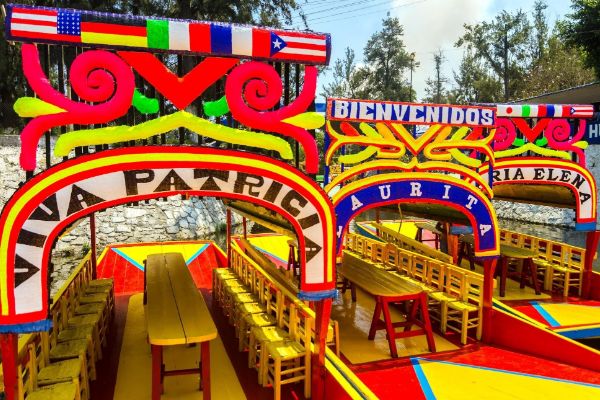
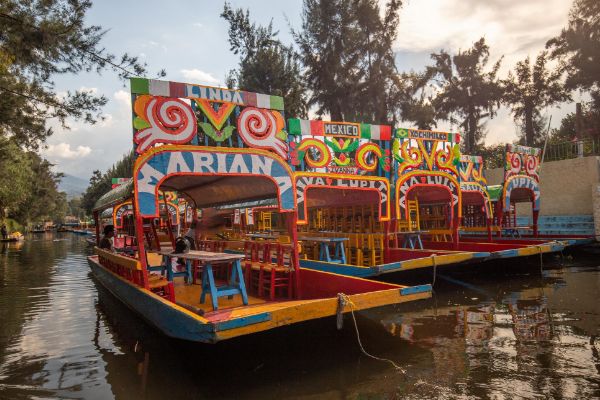
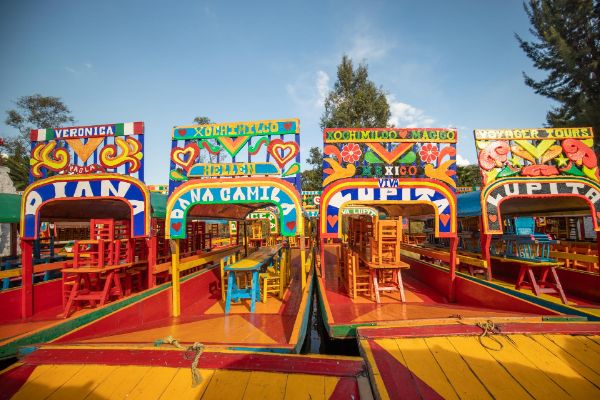
Of course, the trajineras are still central to what most travelers experience first. Mexico City’s official tourism page calls riding the canals one of the capital’s essential tourist experiences and notes that traditional launches such as Nativitas, Cuemanco, and Fernando Celada offer rides on trajineras decorated with floral arches. The route can include views of productive chinampas, birds, greenhouses, and the floating activity of food vendors and musicians.
But even within the trajinera experience, there is more than one kind of visit. The official page for Xochimilco Ecological Park explains that trips from that launch tend to have a more environmental and naturalist character, with a stronger focus on cleaner and more pristine stretches of canal. Meanwhile, the official Cuemanco page describes its setting within a large ecological park and notes that the surrounding territory includes substantial chinampa areas. This matters because it shows that not every Xochimilco visit has to follow the same party-style pattern that foreign travelers often see online.
The official boat launch tips and regulations page also reveals something useful for travelers: there is a real operational structure behind the experience. It states that most trajineras are designed for up to 18 passengers, and that local regulations prohibit people from moving from one boat to another during the trip. These details may seem practical, but they also reinforce the idea that Xochimilco is an organized heritage and tourism environment, not a random free-for-all.
So yes, the ride is a major attraction. But the ride is only the visible surface of a deeper place. Once travelers understand the history of the canals, the agricultural logic of the chinampas, and the continuity of community traditions, the trajinera becomes a gateway into something much richer.
The historic and community side of Xochimilco
Many travelers never realize that the historic center of Xochimilco is worth visiting in its own right. Official Mexico City tourism states that the area preserves architectural jewels from the viceregal period, especially the Parroquia y Exconvento de San Bernardino de Siena, a sixteenth-century building that dominates the local landscape. The same official source notes that the surrounding streets and plazas preserve the atmosphere of a traditional town rather than a generic urban district.
This matters because it broadens the visitor’s idea of what Xochimilco is. It is not only a set of canals. It is also a historic settlement with original neighborhoods, public squares, and long-standing community traditions. The official boat-launch guidance even reminds visitors that the historic center is a destination in itself and describes its 17 original barrios as walkable and among the most charming places in Mexico City.
For culturally curious travelers, this is one of the most rewarding parts of the area. The central churches, plazas, markets, and neighborhood atmosphere make Xochimilco feel like a place with a complete identity, not just a single attraction. That fuller identity is what helps visitors understand why Xochimilco remains so important within Mexico City.
Why foreign travelers connect with Xochimilco so quickly
Foreign travelers usually connect with Xochimilco very quickly because it works on several levels at once. On the surface, it is colorful, lively, photogenic, and easy to enjoy. But beneath that first impression, it offers something deeper: a rare chance to see how water, agriculture, ritual, and urban memory still shape part of Mexico City. UNESCO’s description of the site as the last reminder of traditional land use in the basin gives this immediate visual appeal a much deeper meaning.
There is also a strong emotional contrast that many visitors find memorable. Mexico City can feel monumental and intense, especially in the historic center or in large museums. Xochimilco offers another rhythm. Even when it is lively, it feels more horizontal, more environmental, and more community-based. The city’s own tourism descriptions reflect this by showing that Xochimilco includes not only canal rides, but also settlements, markets, chinampa agriculture, ecological zones, and original towns.
This combination helps explain why Xochimilco is so much more than a novelty. It gives visitors one of the clearest examples of how Mexico City is not a single uniform place, but a vast capital made of different historical worlds that still coexist.
Practical things visitors should know
For practical planning, it is useful to know that Xochimilco includes several different embarcaderos, or boat launches. Official Mexico City tourism highlights Nativitas, Cuemanco, and Fernando Celada among the traditional launches used for canal rides. The city also notes that the Xochimilco Light Rail Station is one of the easiest ways to reach the canals, and that visitors can then walk or take a taxi to a chosen launch.
Travelers should also know that different launches can produce different kinds of experiences. The official Ecological Park and Cuemanco pages suggest a more environmental and natural setting, while the city’s broader Xochimilco material highlights the more festive side many people associate with trajineras. That means the “best” Xochimilco visit depends a lot on what kind of experience someone actually wants.
Another useful point is that local regulations exist and should be respected. The city’s official boat tips page states that boat capacity limits are enforced, that safety rules apply, and that passengers are expected to remain seated and not move between boats. Knowing this beforehand can help travelers enjoy the outing more comfortably and respectfully.
Why a private guide can make the visit much richer
Xochimilco is enjoyable without a guide, but a private guide can make the visit much more meaningful because so much of its value is not immediately obvious. On your own, it is easy to remember the colors, the music, and the atmosphere. With expert interpretation, the canals become part of a much larger story about ancient lake systems, chinampa agriculture, original settlements, syncretic traditions, and the survival of a vulnerable World Heritage landscape. UNESCO’s description and the city’s official tourism material both show how much more there is to understand beneath the surface.
A guide can also help travelers choose the kind of Xochimilco that fits them best. Some people want a lively trajinera route. Others are more interested in ecology, agriculture, local history, or the historic center. Because official city sources describe several possible launches and distinct aspects of the area, interpretation and route planning can make a huge difference in how complete and satisfying the experience feels.
For travelers who want more than a floating party, that deeper approach is often what transforms Xochimilco from a fun outing into one of the most memorable cultural experiences in Mexico City.
Final thoughts
What makes Xochimilco so special is not only its beauty or its famous boats. It is the way canals, chinampas, agriculture, neighborhood traditions, ecological value, and historical memory still come together in one living cultural landscape. UNESCO recognizes it as an exceptional reminder of ancient land use in the Mexico City basin, while official local sources show that it remains a place of community life, original settlements, and active heritage.
For travelers who want to experience a side of Mexico City that feels colorful, historic, local, and deeply rooted, Xochimilco offers far more than a boat ride. To explore it with more context, more meaning, and a more personal cultural perspective, discover Mexico City with Cleyber Can Guide.