Why Mexican traditions leave such a strong impression
One of the reasons Mexico fascinates so many travelers is that culture here is not limited to museums, monuments, or archaeological sites. It is also alive in music, food, festivals, rituals, crafts, and community celebrations that continue to shape everyday life across the country. Mexico’s cultural richness is recognized internationally as well. In 2026, the Mexican government highlighted that the country has 12 cultural elements recognized by UNESCO as Intangible Cultural Heritage, which helps explain why so many visitors feel that traveling through Mexico means encountering living traditions, not only historical remains.
For foreign visitors, this is often one of the biggest surprises. Many arrive expecting beaches, pyramids, and famous food, but they quickly discover something deeper: Mexico is a country where traditions still organize collective memory, family life, local pride, and regional identity. That is why cultural travel here can feel so different from ordinary tourism. A market, a celebration, a song, or a local dish often carries centuries of meaning behind it.
Day of the Dead
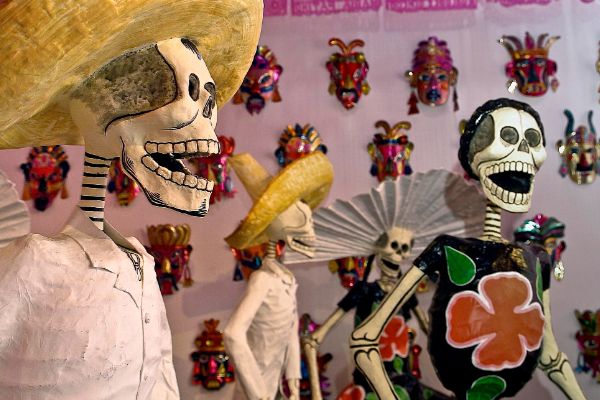
Few traditions fascinate foreign visitors more than Day of the Dead. UNESCO describes it as an indigenous festivity dedicated to the dead that commemorates the temporary return of deceased loved ones, while Visit Mexico explains that it is celebrated mainly on November 1 and 2 and combines pre-Hispanic heritage with Catholic influence. Rather than being a dark or gloomy observance, it is a deeply symbolic tradition centered on memory, family, and the continuing bond between the living and the dead.
For many travelers, what makes Day of the Dead so unforgettable is its visual and emotional richness. Altars, or ofrendas, are decorated with candles, flowers such as cempasúchil, photographs, food, drinks, and objects that mattered to the person being remembered. Visitors often expect something similar to Halloween, but Day of the Dead is not really about fear or horror. It is about remembrance, continuity, affection, and the idea that death remains part of the family story. That emotional complexity is one of the reasons it leaves such a strong impression on people visiting Mexico for the first time.
Mariachi
Another tradition that foreign visitors immediately associate with Mexico is mariachi, but the real tradition is much richer than a tourist stereotype. UNESCO inscribed Mariachi, string music, song and trumpet on the Representative List of the Intangible Cultural Heritage of Humanity in 2011. UNESCO explains that mariachi is not just a musical style, but a cultural expression that transmits values, local history, and language through music, singing, and community participation.
What fascinates travelers is that mariachi feels both iconic and alive. It can appear in plazas, restaurants, private celebrations, religious events, and major festivals. It is formal enough to represent the country internationally, but still close enough to everyday life that visitors can encounter it in very human settings. That balance between national symbol and lived tradition is a big part of its appeal. For many foreign travelers, hearing mariachi in person is one of those moments when Mexico suddenly feels more emotional, more intimate, and more memorable than expected.
Traditional Mexican cuisine
Mexican food is often the first thing that attracts international curiosity, but travelers are often surprised by how much cultural depth exists behind the cuisine. UNESCO recognized Traditional Mexican cuisine: ancestral, ongoing community culture, the Michoacán paradigm in 2010, describing it as an elaborate cultural model tied to farming, ritual practices, ancestral knowledge, culinary techniques, and community customs. UNESCO specifically notes the central role of corn-based foods such as tortillas and tamales, including their place in symbolic traditions like Day of the Dead offerings.
This matters because many foreign visitors arrive thinking of Mexican food only in terms of tacos, salsa, and street snacks. Those are important and delicious, but they are only a small part of a much bigger story. Traditional Mexican cuisine is regional, symbolic, and deeply tied to identity. Michoacán’s official tourism materials, for example, present the state’s cuisine as part of a living heritage recognized by UNESCO. Once travelers begin to understand that Mexican cooking includes ritual meaning, family transmission, local ingredients, and community memory, meals stop being just meals. They become one of the most direct ways to understand the country.
La Guelaguetza
Among Mexico’s great regional celebrations, La Guelaguetza in Oaxaca is one of the most visually and culturally powerful. The official Oaxaca Guelaguetza site describes it as the state’s most important multicultural celebration and explains that it continues the tradition of the Lunes del Cerro, held in July, with performances of traditional dances from communities across Oaxaca. Mexico’s federal tourism ministry also presents Guelaguetza as a major showcase of the cultural, gastronomic, artisanal, and communal richness of Oaxaca and Mexico.
Foreign visitors are often fascinated by the way Guelaguetza brings together music, dress, dance, food, and indigenous identity in one celebration. It does not feel like a simple performance staged for tourists. It feels like a regional expression of pride, reciprocity, and living heritage. That is part of what makes Oaxaca so compelling for cultural travelers in general, and Guelaguetza in particular. It allows visitors to see that Mexico is not one uniform culture, but a country of strong regional identities that continue to celebrate themselves publicly and joyfully.
Las Posadas
For travelers who visit Mexico in December, Las Posadas can be one of the most charming traditions to experience. According to Mexico’s National Commission of Natural Protected Areas, posadas are representative celebrations held during the nine days before Christmas, beginning on December 16 and culminating on December 24. They recreate the pilgrimage of Mary and Joseph seeking shelter, but they also function as neighborhood gatherings filled with songs, food, candles, and shared festivity.
What fascinates foreign visitors is the mixture of devotion and celebration. Posadas often include processions, music, prayers, traditional foods, and of course the joyful breaking of a piñata. For many travelers, this feels very different from the more commercial Christmas culture they may know elsewhere. In Mexico, the atmosphere can feel more communal, more participatory, and more rooted in neighborhood life. It is one of those traditions that reveals how strongly collective celebration still shapes Mexican social life.
Charrería
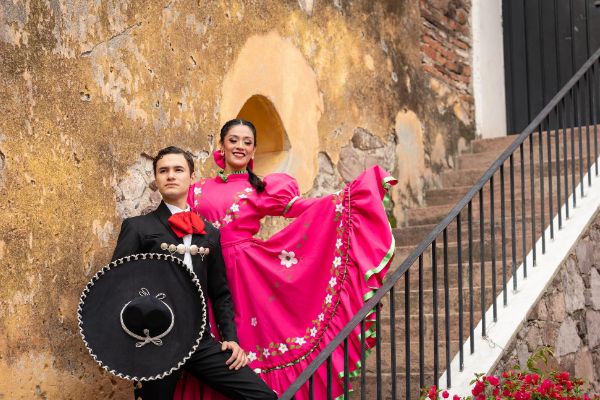
Another tradition that often surprises foreign visitors is charrería, sometimes described as Mexico’s national equestrian tradition. UNESCO inscribed Charrería, equestrian tradition in Mexico on the Representative List of Intangible Cultural Heritage in 2016. UNESCO explains that it originated in livestock-herding communities and developed as a cooperative practice among riders, while INAH notes that it remains an important part of the cultural identity of the communities that keep it alive.
Travelers are often fascinated because charrería is much more than a rodeo-like spectacle. It combines horsemanship, ceremony, costume, skill, and social tradition. It also shows how rural history remains visible in modern Mexican identity. For someone who only knows Mexico through urban images or beach tourism, seeing charro culture can open a very different window into the country. It reveals a heritage connected to land, livestock, honor, and community values that still resonates strongly today.
The ritual of the Voladores
One of the most striking traditions for international visitors is the ritual ceremony of the Voladores, especially associated with the Totonac people of Veracruz. UNESCO describes it as a fertility dance and spiritual ceremony in which participants climb a tall pole and descend in circles from the top as part of a ritual expressing respect for nature and the spiritual universe. UNESCO inscribed the ritual on the Representative List of Intangible Cultural Heritage in 2009.
For foreign travelers, the ceremony is unforgettable because it combines physical daring with spiritual symbolism. Even people who do not fully understand the ritual immediately feel that it is something ancient, formal, and deeply meaningful. That is part of what makes it so fascinating. It is visually spectacular, but it is not simply entertainment. It is a ceremonial act rooted in worldview, tradition, and continuity. Experiences like this help travelers realize that Mexico’s living culture still includes practices with profound indigenous roots.
Pirekua, the traditional song of the P’urhépecha
Another tradition that many foreign visitors do not know before coming to Mexico is pirekua, the traditional song of the P’urhépecha people of Michoacán. UNESCO inscribed Pirekua, traditional song of the P’urhépecha in 2010, explaining that it is performed by men and women, either solo, in duets, or in groups, and that it reflects social relationships, historical memory, and cultural values within P’urhépecha communities.
This tradition fascinates culturally curious travelers because it reveals another side of Mexico that is often invisible in mainstream tourism. Pirekua is not globally branded in the way mariachi is, but that is precisely part of its power. It shows how much musical diversity exists within the country and how strongly indigenous communities continue to preserve identity through language, melody, and collective memory. For travelers who want to go beyond the most familiar symbols of Mexico, traditions like pirekua can be some of the most rewarding discoveries.
Holy Week in Iztapalapa
One of the most powerful community traditions in Mexico City is the Representation of the Passion, Death and Resurrection of Christ in Iztapalapa, held during Holy Week. UNESCO inscribed it on the Representative List of Intangible Cultural Heritage in 2025, describing it as a community tradition that brings together local residents in an expression of faith, identity, and culture. Official Mexico City sources also note that the event in Iztapalapa attracts millions of visitors and has long been the most important cultural and religious event in the area.
For foreign visitors, the Iztapalapa Passion is fascinating because of its scale and intensity. This is not a small reenactment staged for tourists. It is a deeply rooted community event involving neighborhoods, organization, devotion, and public participation on an enormous scale. It also reveals something very important about Mexican traditions: many of them continue to exist because communities actively carry them forward year after year. In that sense, Iztapalapa’s Holy Week is not only a religious event. It is also a living example of collective identity.
Indigenous textile traditions
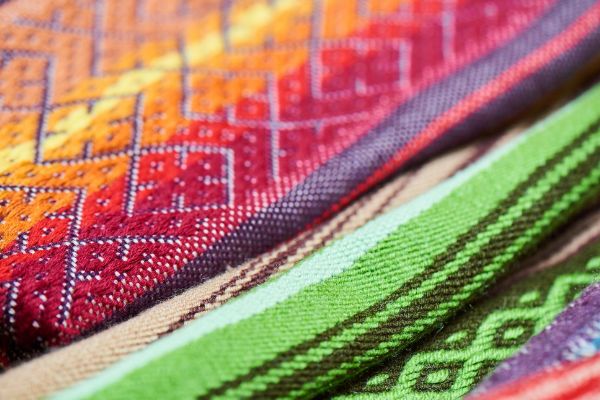
Mexico’s textile traditions are another major source of fascination for foreign travelers, even if visitors do not always think of them first as “traditions” in the same way as music or festivals. Official Mexican cultural diplomacy and exhibition materials repeatedly highlight the richness of the country’s regional textile heritage, from embroidered garments to woven pieces created by indigenous communities whose techniques preserve identity, memory, symbolism, and craftsmanship across generations.
What makes these traditions so compelling is that they are both artistic and everyday. Travelers encounter them in markets, festivals, museums, and community settings, but also in clothing still worn with pride in different parts of the country. Textiles often communicate place, lineage, and local style in ways outsiders do not immediately recognize. Once visitors begin to understand that a blouse, shawl, or embroidered dress can carry cultural meaning, they often start seeing Mexican material culture with very different eyes. These textile traditions are not simply beautiful crafts. They are forms of cultural continuity.
Final thoughts
What fascinates foreign visitors about Mexican traditions is not only their beauty, color, or energy. It is the fact that these traditions still feel alive. Whether the experience is a Day of the Dead altar, a mariachi performance, a bowl of traditional food, a Guelaguetza dance, or a community celebration in Iztapalapa, travelers often sense that they are seeing something that still matters deeply to the people who practice it. That authenticity is one of Mexico’s greatest cultural strengths.
For travelers planning a cultural trip to Mexico, understanding these traditions makes every museum, historic site, neighborhood, and local experience more meaningful. And for visitors exploring the capital, that cultural context can transform the way Mexico City is experienced. To discover the city with more depth and a stronger connection to the traditions that help shape Mexico, explore with Cleyber Can Guide.